
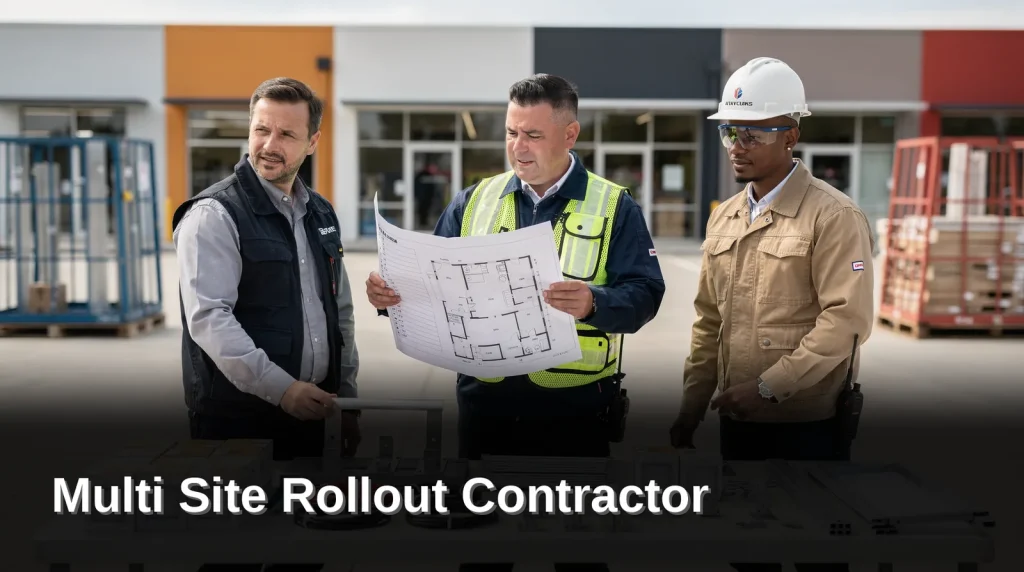
Multi-site retail and franchise rollouts across the Southeast require a general contractor with proven multi-location expertise. MHL Solutions, Inc. delivers turnkey project management across Georgia, North Carolina, South Carolina, and Tennessee. This approach ensures each location opens on time and within budget, maintaining brand consistency across every rollout.
What defines a multi-site rollout program?
A multi-site rollout program is a structured execution initiative that replicates a single brand prototype across multiple addresses. Multi-unit franchise owners and national retail brands treat these programs as coordinated construction campaigns, not isolated projects. A multi site rollout contractor manages this complexity through centralized planning and disciplined controls. Without that framework, organizations face fragmented budgets, misaligned schedules, and inconsistent store appearances that erode brand equity and delay revenue activation.
Why is centralized oversight critical for a rollout?
A rollout is not twelve separate construction jobs. It is one program with twelve addresses. When each site operates independently, brands end up with twelve different budgets, twelve different schedules, and twelve inconsistent store appearances. A national rollout general contractor prevents this fragmentation by enforcing uniform standards across every location. The result is predictable quality and synchronized completion dates.
How does a rollout differ from a single-location project?
Single-location projects follow a linear path. Multi-site rollouts demand parallel execution across markets in Georgia, North Carolina, South Carolina, and Tennessee. The work goes well beyond construction. It is a structured execution program requiring centralized procurement, standardized scopes of work, and rigorous milestone tracking. MHL Solutions applies this discipline to store-in-store rollouts and franchise buildouts, ensuring site forty opens as cleanly as site one.
A store renovation atlanta ga project illustrates the stakes. One delayed permit or material shortage in a single market cascades across the entire program. Coordinated scheduling absorbs these disruptions. Fragmented management does not. The difference determines whether a brand captures seasonal revenue or watches it evaporate.

How do you select a rollout contractor?
Selecting a multi site rollout contractor requires evaluating a firm’s ability to replicate results across multiple markets without losing consistency. A national rollout general contractor must deliver identical quality, materials, and timelines at every address. Without this discipline, franchise operators face fragmented brand experiences and escalating costs that erode market position.
What questions reveal a contractor’s rollout capability?
Three questions separate program-level contractors from single-site builders. First, does the firm provide a single point of contact for the entire program? This structure ensures consistent reporting and prototype adaptation per site. Second, does the contractor maintain a vetted subcontractor base in every target market across the Southeast? Third, can the firm demonstrate completed rollouts of similar scale and complexity?
How should franchise operators evaluate brand standards compliance?
For franchise operators, the contractor must work within the brand standards package and coordinate with the franchisor’s construction requirements. MHL Solutions reviews the brand prototype specifications before bidding, identifying potential conflicts between the standards and local building codes. This pre-construction analysis prevents costly rework during store renovation atlanta ga projects and other regional builds.
The evaluation process follows four steps:
- Request a rollout-specific portfolio showing three or more concurrent site completions.
- Verify the contractor’s licensing across Georgia, North Carolina, South Carolina, and Tennessee.
- Confirm a dedicated program manager serves as the single accountability point.
- Audit reporting samples for schedule adherence, photo documentation, and budget tracking.
Retailers executing regional and nationwide rollouts partner with experienced general contractors who understand how to scale without losing consistency. A multi-unit franchise buildout demands a coordinated construction program that replicates a single brand prototype across multiple addresses. Contractors who treat each site as an independent project produce twelve different outcomes instead of one unified brand presence.
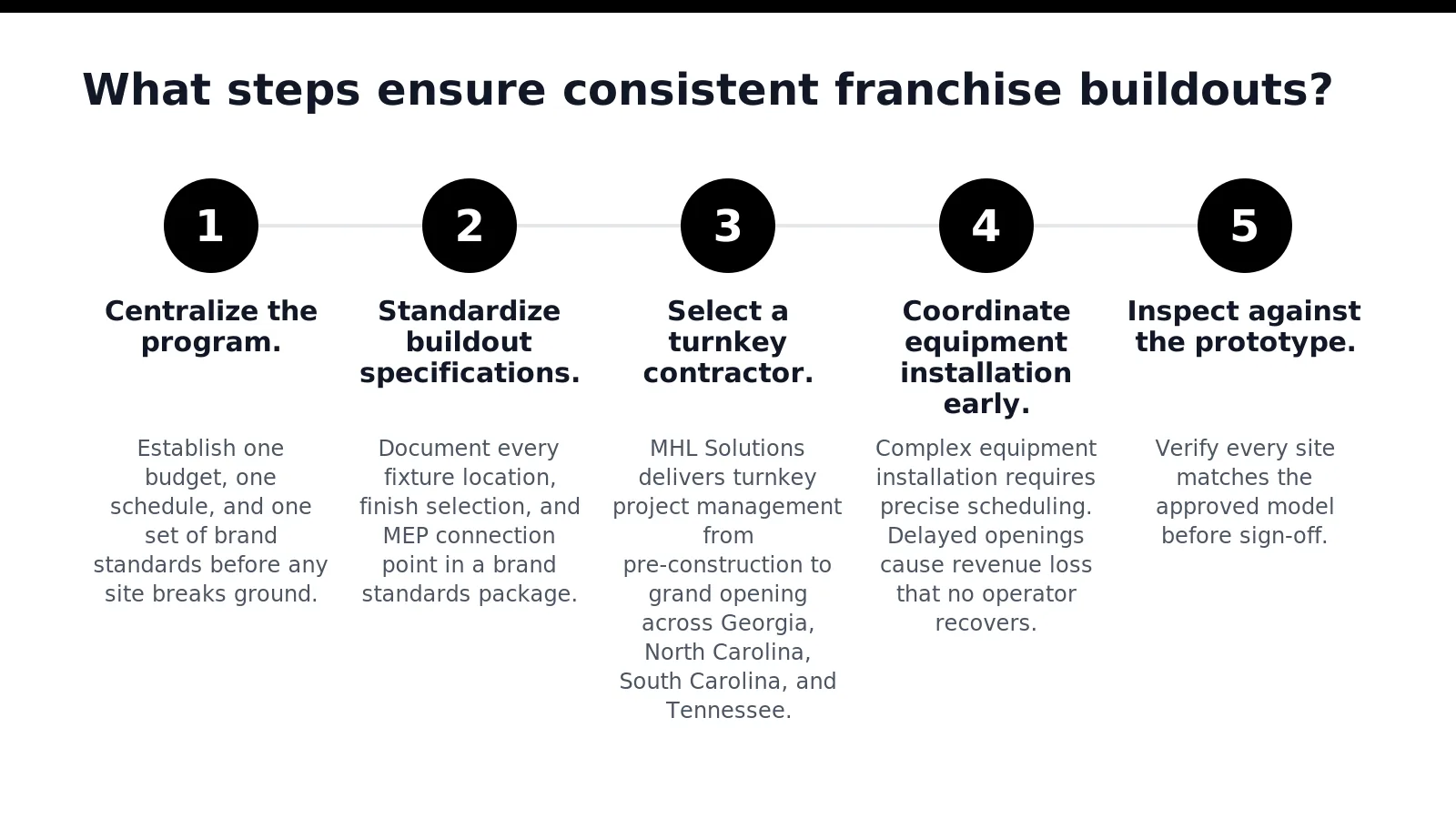
What steps ensure consistent franchise buildouts?
Consistent franchise buildouts depend on a unified program, not scattered projects. A multi site rollout contractor treats every address as one coordinated execution with identical quality, materials, and timelines. Without centralized controls, operators risk fragmented results across markets. A national rollout general contractor prevents these costly inconsistencies through structured, repeatable processes.
What planning framework supports multi-site consistency?
Site selection and project management must share one plan, one budget, and one set of dates. The Retail Construction Management and Store Expansion Guide confirms that retail construction management works best when both functions operate from a single source of truth. Disconnected teams produce disconnected stores. Aligning these disciplines from day one eliminates the drift that erodes brand standards across locations.
How do buildout types affect the rollout approach?
Common buildout types shape the execution strategy. Vanilla shell buildouts start from base building condition. Second-generation retail space improvements adapt existing footprints. Interior layouts follow brand standards or owner-directed design. Each type demands different scopes, yet all require identical finish quality across every site. A store renovation atlanta ga project, for instance, follows the same prototype specifications as locations in Charlotte or Nashville.
Follow these steps for consistent execution:
- Centralize the program. Establish one budget, one schedule, and one set of brand standards before any site breaks ground.
- Standardize buildout specifications. Document every fixture location, finish selection, and MEP connection point in a brand standards package.
- Select a turnkey contractor. MHL Solutions delivers turnkey project management from pre-construction to grand opening across Georgia, North Carolina, South Carolina, and Tennessee.
- Coordinate equipment installation early. Complex equipment installation requires precise scheduling. Delayed openings cause revenue loss that no operator recovers.
- Inspect against the prototype. Verify every site matches the approved model before sign-off.
MHL Solutions minimizes downtime and maintains brand consistency through disciplined project controls. The company handles complex equipment installation efficiently, preventing the revenue loss that follows delayed openings. Each location opens on time and within budget, matching the prototype exactly.
How do you manage store renovations across markets?
Managing store renovations across multiple markets requires a centralized program, not a collection of independent projects. A multi site rollout contractor treats every address as one coordinated initiative with identical quality standards, materials, and timelines. Without this unified approach, brands face fragmented results and escalating costs.
An outdated commercial storefront creates an immediate negative first impression that drives potential buyers to competitors before they ever step inside. The cost of inaction accumulates as lost daily sales that a single refresh can recover. For multi-unit operators across the Southeast, that lost revenue compounds across every location waiting for updates.
What does a national rollout general contractor coordinate during renovations?
A national rollout general contractor manages every build-out phase from site readiness through final finishes. The scope includes:
- Pre-construction assessments and permitting across multiple jurisdictions
- Material procurement standardized for brand consistency
- Scheduling that sequences crews efficiently across locations
- Quality control inspections at each milestone
This centralized coordination prevents the budget and schedule drift that occurs when each site operates independently.
How do renovation teams minimize disruption during a store renovation atlanta ga project?
Remodel and refresh programs execute during open-store hours, nights, or weekends to keep businesses operational. Phased scheduling confines construction activity to off-peak windows. Retailers avoid closing their doors while outdated interiors get modernized.
A licensed general contractor serving Georgia, North Carolina, South Carolina, and Tennessee provides full-service management for these renovations. The company’s retail fit-out expertise ensures each location meets brand standards without interrupting daily sales. Operators gain consistent results whether refreshing one Atlanta storefront or twenty sites across four states.
Conclusion
Multi-site operators across the Southeast who centralize their rollout program with a single contractor eliminate the fragmented results that erode brand consistency and inflate costs. The decision to treat every location as one coordinated initiative, rather than independent projects, determines whether a franchise expansion delivers a unified brand presence or twelve different outcomes.
Frequently Asked Questions
What is a multi-site rollout contractor?
A multi-site rollout contractor is a general contractor that manages construction across many locations as a single coordinated program rather than as separate, independent jobs. MHL Solutions, Inc. provides this turnkey project management for multi-unit retail, QSR, and franchise buildouts across Georgia, North Carolina, South Carolina, and Tennessee, using centralized budgets, schedules, and brand standards to keep every site consistent.
How does a national rollout general contractor keep multiple locations consistent?
A national rollout general contractor enforces one set of brand standards, one procurement process, and one reporting structure across every site in the program. This prevents the fragmented budgets, mismatched schedules, and inconsistent finishes that occur when each location is treated as its own project.
What should franchise operators look for when choosing a rollout contractor?
Franchise operators should confirm the contractor offers a single point of contact for the entire program, maintains a vetted subcontractor base in every target market, and can show completed rollouts of similar scale. The contractor should also review the brand standards package before bidding to catch conflicts with local building codes early.
How are store renovations handled without disrupting daily business?
Renovation and refresh work is typically phased around open-store hours, nights, or weekends so locations stay operational during construction. This approach, used on projects like store renovations in the Atlanta, GA market, lets retailers modernize storefronts without closing their doors or losing sales.
Which states does MHL Solutions serve for multi-site rollouts?
MHL Solutions, Inc. delivers turnkey rollout and renovation project management across Georgia, North Carolina, South Carolina, and Tennessee, giving multi-unit operators a single licensed contractor for every site in the region.