
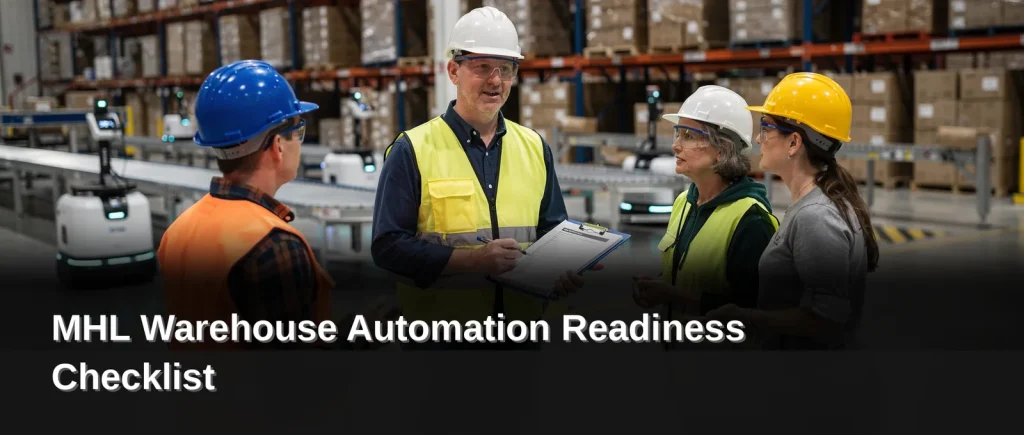
A warehouse automation readiness checklist evaluates material flow, pick-path standardization, and congestion separation before adding technology. MHL Solutions, Inc, licensed across GA, NC, SC, and TN, coordinates multi-unit retail construction as one repeatable program. Operators scoring readiness across 30 criteria identify gaps, strengthening accuracy controls with scanning or light-directed picking for an informed consultation.
Is your warehouse ready for automation?
Warehouse automation replaces manual tasks with technology. Robotics, automated conveyor belts, and inventory management software handle receiving, sorting, packing, and shipping with higher accuracy, speed, and productivity. Facilities that delay this evaluation lose throughput capacity and labor efficiency as order volumes climb.
MHL warehouse automation readiness starts with a clear-eyed look at current operations. MHL Solutions, Inc., a licensed general contractor across Georgia, North Carolina, South Carolina, and Tennessee, delivers turnkey project management from pre-construction to grand opening. The company builds trust through full attention to detail in every project from the start, committed to delivering quality and sustainability in construction services.
What does a material flow assessment checklist MHL-US cover?
A material flow assessment checklist MHL-US examines how goods move through receiving, storage, picking, and shipping zones. Operators identify bottlenecks, redundant travel paths, and manual touchpoints that automation could eliminate. The checklist prioritizes fixes that reduce human involvement in repetitive tasks.
How does automation planning consultation MHL work?
An automation planning consultation MHL evaluates whether existing workflows justify technology investment. The consultation reviews current throughput, labor allocation, and facility constraints before recommending robotics or conveyor systems. MHL Solutions specializes in multi-unit retail construction, quick-service restaurant (QSR) and franchise buildouts, store-in-store rollouts (such as restaurant concepts and service kiosks inside major retail stores like Walmart), and commercial tenant improvements.
Key readiness indicators include:
- Consistent order volumes that strain manual picking
- High labor costs in receiving and sorting
- Accuracy errors causing returns or rework
- Facility layouts that support equipment installation
Warehouses that score poorly on these indicators risk falling behind competitors who automate sooner.

What does a material flow assessment reveal?
A material flow assessment reveals exactly where movement breaks down inside a facility. It maps every touch, every handoff, and every unnecessary step between receiving and shipping. Operators who skip this step risk automating chaos instead of eliminating it.
The material flow assessment checklist MHL-US applies targets four critical areas before any equipment decision. Facility flow and layout improvements come first. Standardizing pick paths and reducing travel distance prevents automation from locking in bad routes. Separating replenishment from active picking reduces congestion in narrow aisles. Strengthening accuracy controls with scanning, process checks, or light-directed picking catches errors before they compound downstream.
What operational bottlenecks does a flow assessment uncover?
Congestion points and redundant handling become visible immediately. Quantifying manual touches helps assess conveyor or sortation return on investment. Defining sortation needs by carrier, lane, zone, or batch flow reveals whether current routing matches actual order profiles.
Why should WMS processes be standardized before adding equipment?
Documenting and standardizing warehouse management system processes before adding equipment prevents costly rework. Automation amplifies existing logic. If the WMS directs picks inefficiently, automated systems execute those inefficiencies faster. MHL Solutions, Inc. coordinates multi-unit retail construction as one repeatable program, and the same principle applies here: consistency across sites depends on standardized upstream processes. An automation planning consultation MHL addresses these prerequisites before capital commitments lock in.

How do you prepare for an automation consultation?
Preparation separates a productive automation consultation from a wasted one. Warehouse operators who document operational realities before the first meeting receive recommendations that match actual conditions, not assumptions. Selecting the right warehouse automation system is a strategic decision where pallet profile, SKU count, throughput targets, safety, energy use, integration requirements, and operational flow all influence performance.
What information should a warehouse operator gather first?
A material flow assessment checklist MHL-US starts with physical inventory characteristics. Pallet size, weight, quality, and handling requirements matter. SKU count, batch logic, and stock rotation requirements follow. These details determine whether palletised automation performs as expected.
How does MHL warehouse automation readiness factor into the consultation?
MHL warehouse automation readiness depends on documented inbound, outbound, and peak throughput targets. Integration requirements complete the picture. An automation planning consultation MHL uses these inputs to produce accurate recommendations rather than generic proposals.
MHL Solutions, Inc. delivers turnkey project management from pre-construction to grand opening. The company tailors construction and remodeling solutions to each client’s timeline and budget with no hidden costs. Operators who skip preparation risk recommendations that fail under real throughput demands.
Conclusion
A warehouse operator who completes this readiness checklist enters an automation consultation with documented material-flow realities, not assumptions. The assessment reveals exactly where movement breaks down, which bottlenecks automation must solve, and whether current WMS processes justify technology investment. This preparation ensures recommendations match actual throughput demands rather than generic proposals, turning the consultation into a strategic decision grounded in operational facts.