
Franchise and QSR operators across Georgia, North Carolina, South Carolina, and Tennessee require a licensed general contractor specializing in multi-unit rollouts and health department compliance. MHL Solutions, Inc. delivers commercial restaurant build-outs that minimize downtime, handling equipment installation and permit navigation efficiently for opening day readiness.
What Should You Prepare Before a Restaurant Build-Out?
Preparation determines whether a restaurant opens on schedule or bleeds capital through delays. A standard 1,800-square-foot fast food restaurant built from the ground up typically costs between $1.3 million and $2.5 million, according to TCG’s 2026 construction cost guide. That figure includes design, sitework, kitchen equipment, and drive-thru infrastructure. Every week of delay means the operator pays rent on a space generating zero revenue.
What Documents Do Franchisees Need Before Construction Starts?
Franchise operators must secure the franchisor’s approved prototype plans and equipment schedules before any contractor mobilizes. QSR franchise buildouts follow strict brand standards that dictate everything from kitchen flow to customer-facing finishes. Missing these documents stalls permitting and triggers costly redesigns mid-project.
How Do Site Conditions Affect the Build-Out Timeline?
Four confirmations decide whether a buildout stays on schedule: zoning, parking capacity, structural readiness, and equipment specifications. MHL Solutions, Inc., a licensed General Contractor operating across Georgia, North Carolina, South Carolina, and Tennessee, verifies these items before lease signing. Unresolved zoning conflicts or insufficient parking capacity derail even well-funded projects.
Selecting Commercial Restaurant Build-Out Contractors with multi-unit experience protects franchisees from these pitfalls. MHL Solutions delivers turnkey commercial construction Southeast project management from pre-construction through grand opening. The company’s focus on commercial interiors and franchise prototype rollouts ensures each location meets brand specifications without schedule erosion. Operators who skip these preparatory steps face change orders, health department rejections, and months of unproductive lease payments.
How Do You Assemble the Build-Out Team?
Assembling a build-out team requires selecting specialists who coordinate seamlessly across multiple regulatory and operational domains. A turnkey commercial construction Southeast provider streamlines this process by managing the full roster of required professionals under a single point of accountability.
What specialists must a QSR build-out team include?
The team must include architects, contractors, equipment vendors, health departments, fire marshals, and often a franchisor with their own approval checklist. Every week of delay costs rent on a space generating zero revenue, according to The Build-Out Process for Quick Service Restaurants. Missing any one of these players fractures the schedule.
How does a design-build approach prevent delays?
A design-build approach integrates plumbing, electrical, and mechanical systems early in the planning phase. MHL Solutions, Inc. applies this method across Georgia, North Carolina, South Carolina, and Tennessee, preventing costly delays that arise when trades are sequenced reactively. Early coordination eliminates conflicts before they reach the job site.
Commercial Restaurant Build-Out Contractors with multi-state licensing handle permit and health department review paths directly. A Georgia-licensed builder ensures kitchens meet code and open on schedule. For QSR franchise buildouts, this regulatory fluency becomes indispensable. Franchisors impose layered approval checklists that general contractors often miss.
MHL Solutions, Inc. builds trust through meticulous attention to detail from project inception. The company’s family-owned values drive a commitment to quality and sustainability in every phase. Operators pursuing multi-unit rollouts benefit from a single partner who manages the commercial kitchen contractor relationship alongside every other trade. The result is a cohesive team, not a collection of disconnected vendors.
How Do You Budget a QSR Franchise Build-Out?
Budgeting a QSR franchise build-out starts with a cost forecast completed before the lease is signed or ground is broken. That forecast protects the financial viability of the entire project. Operators who skip this step absorb the consequences later, when change orders and delays erode opening-day margins.
QSR franchise buildouts reward disciplined planning. A standard 1,800 square foot fast food build typically runs between $1.3 million and $2.5 million, according to TCG’s 2026 guide. TCG also notes those figures climb significantly higher in high-cost coastal markets. Southeast markets in Georgia, North Carolina, South Carolina, and Tennessee often compare favorably, yet the same discipline applies everywhere.
What Should a QSR Budget Include Before Construction Begins?
A complete budget covers design, permitting, equipment, and contingency. Operators should confirm zoning, parking capacity, and structural readiness before signing a lease. These four confirmations prevent costly change orders once crews mobilize. A design-build approach integrates these reviews early, which is why many owners choose integrated design-build delivery to hold timelines and budgets firm.
How Does a Contractor Control Costs During the Build?
Commercial Restaurant Build-Out Contractors control costs through sequencing and transparency. MHL Solutions, Inc. builds what clients envision, tailoring construction and remodeling solutions to their timeline and budget with no hidden costs. The company delivers commercial restaurant build-outs that minimize downtime and handle equipment installation efficiently. For multi-unit operators pursuing turnkey commercial construction Southeast rollouts, that single point of accountability removes the gaps where budgets typically leak.
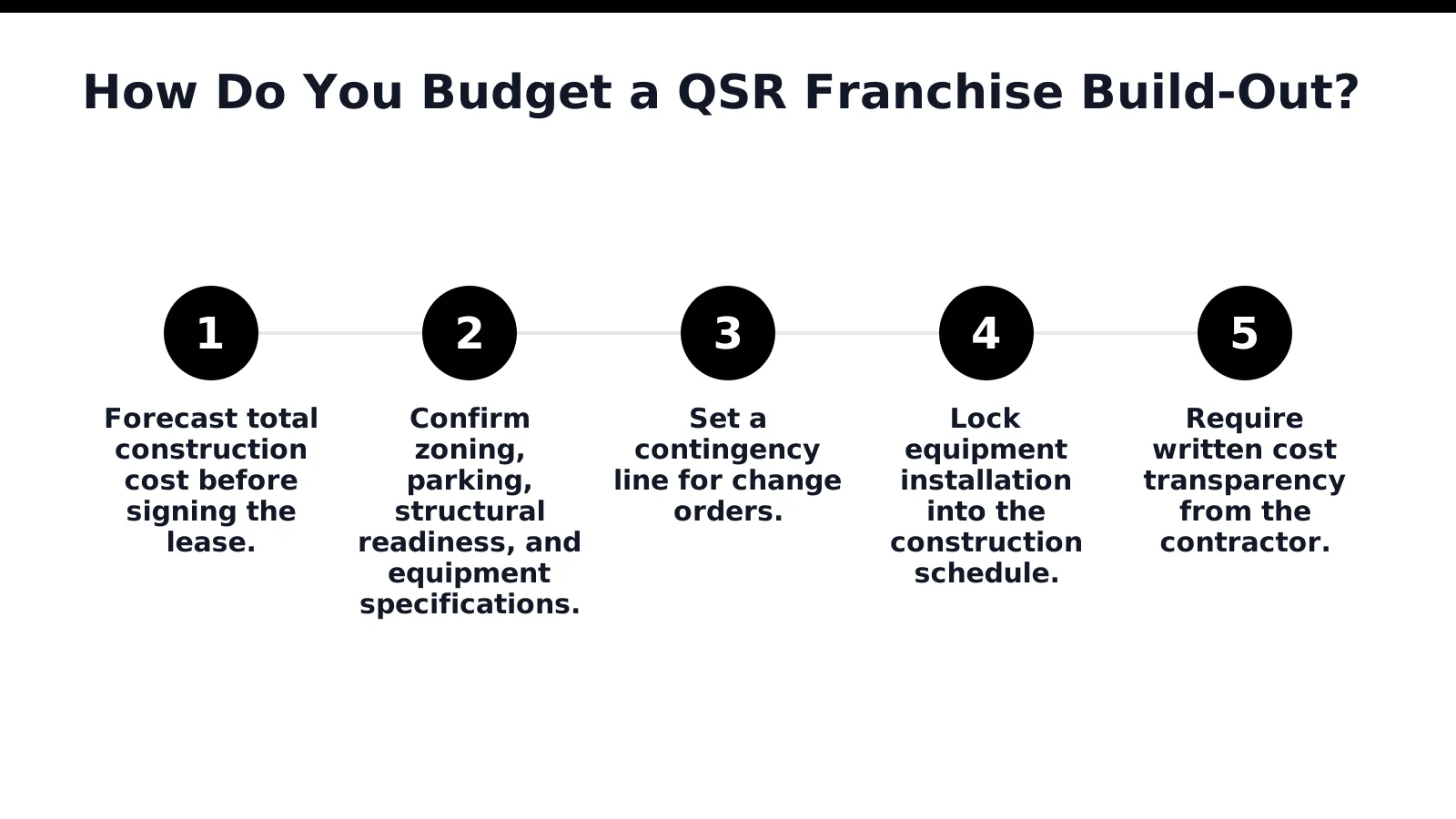
Follow these steps to structure the budget:
- Forecast total construction cost before signing the lease.
- Confirm zoning, parking, structural readiness, and equipment specifications.
- Set a contingency line for change orders.
- Lock equipment installation into the construction schedule.
- Require written cost transparency from the contractor.
Each step protects the next. Skipping any one shifts risk onto the operator’s balance sheet.
How Do You Sequence Permits and Construction?
Permit sequencing follows a fixed order: confirm zoning and landlord approvals, submit construction documents to the local building department, clear health and fire review, then release construction trades only after permits are issued. Skipping a step in that chain stalls the entire schedule. Every week of delay is a week of rent paid on a space generating no revenue.
Commercial Restaurant Build-Out Contractors manage this sequence as a single controlled workflow rather than a series of disconnected handoffs. MHL Solutions, Inc. specializes in multi-unit retail construction, QSR and franchise buildouts, store-in-store rollouts, and commercial tenant improvements. The company holds general contractor licenses across Georgia, North Carolina, South Carolina, and Tennessee.
What Sequence Do Permits Follow?
- Verify zoning, parking capacity, and landlord approval before signing the lease.
- Submit construction documents for building department review.
- Route kitchen and equipment plans through health department review.
- Clear fire marshal review for egress, suppression, and alarm systems.
- Release construction trades only after all permits are issued.
Metro Atlanta restaurateurs need a specialized commercial kitchen contractor to navigate Midtown, Buckhead, and Eastside code requirements. Those high-demand zones demand specialized contractor knowledge that general builders lack.
Why Does Sequencing Matter for Multi-Unit Rollouts?
Understanding each phase of the restaurant build-out process helps operators plan smarter, avoid costly surprises, and open with confidence. That discipline compounds across a multi-unit schedule. QSR franchise buildouts repeat the same permit path at every location, so a sequencing error in one market carries into the next. Turnkey commercial construction Southeast operators treat permitting as a critical path item, not an administrative afterthought.
What Mistakes Derail a Restaurant Build-Out?
Most QSR operators find the construction process far harder than anticipated. The coordination required is relentless. Between signing a lease and opening day, operators manage architects, contractors, equipment vendors, health departments, fire marshals, and often a franchisor with its own approval checklist. Every week of delay means paying rent on a space generating zero revenue.
Commercial Restaurant Build-Out Contractors who lack specialized experience create compounding problems. A general builder unfamiliar with kitchen exhaust systems, grease trap sizing, or health code clearances introduces rework that stretches timelines and inflates budgets. The stakes are high. Unchecked mistakes during pre-construction cascade into change orders that erode profitability before the first customer walks through the door.
What pre-construction oversights cause the most expensive delays?
Four confirmations determine whether a build-out stays on schedule. Zoning compliance, parking capacity, structural readiness, and equipment specifications must be verified before signing a lease. Property owners who skip these checks face costly change orders once construction begins. MHL Solutions, Inc. applies a design-build approach that integrates plumbing, electrical, and mechanical systems early, preventing the coordination failures that derail inexperienced teams.
How does contractor selection impact the build-out timeline?
A reliable contractor minimizes downtime and handles complex equipment installation efficiently. The contractor must also navigate the specific regulatory environment, including permit support requirements that vary by municipality. QSR franchise buildouts demand familiarity with prototype specifications and brand standards. MHL Solutions, Inc. ensures every project is completed on time and within budget, reflecting a commitment to quality and client satisfaction. For multi-unit operators pursuing turnkey commercial construction Southeast, the difference between a smooth rollout and a stalled pipeline comes down to the contractor’s depth of restaurant-specific experience.
Conclusion
The right contractor turns a franchise build-out from a sequence of risks into a controlled workflow. Verify the four pre-construction confirmations, lock equipment installation into the schedule, and demand written cost transparency before work begins. MHL Solutions, Inc. delivers commercial restaurant build-outs that minimize downtime and hold timelines and budgets firm across Georgia, North Carolina, South Carolina, and Tennessee. With restaurant-specific experience and a single point of accountability, operators open on schedule and protect profitability from day one.
Frequently Asked Questions
How much does a commercial restaurant build-out cost?
A standard 1,800-square-foot fast food restaurant built from the ground up typically costs between $1.3 million and $2.5 million, according to TCG’s 2026 construction cost guide. That figure covers design, sitework, kitchen equipment, and drive-thru infrastructure, and it can climb higher in high-cost coastal markets.
What should franchisees confirm before signing a lease?
Franchisees should confirm four items before signing: zoning compliance, parking capacity, structural readiness, and equipment specifications. Verifying these upfront prevents costly change orders and health department rejections once construction begins.
What is a design-build approach and why does it matter for QSR construction?
A design-build approach integrates plumbing, electrical, and mechanical systems early in the planning phase rather than sequencing trades reactively. MHL Solutions, Inc. applies this method across Georgia, North Carolina, South Carolina, and Tennessee to prevent coordination failures that delay opening day.
What order do permits follow in a restaurant build-out?
Permit sequencing follows a fixed order: confirm zoning and landlord approvals, submit construction documents to the local building department, clear health and fire marshal review, then release construction trades only after all permits are issued. Skipping a step stalls the entire schedule.
Which states does MHL Solutions, Inc. serve for franchise and QSR build-outs?
MHL Solutions, Inc. is a licensed general contractor operating across Georgia, North Carolina, South Carolina, and Tennessee, specializing in multi-unit retail construction, QSR and franchise buildouts, store-in-store rollouts, and commercial tenant improvements.