
Metro Atlanta restaurateurs need a specialized commercial kitchen contractor to navigate Midtown, Buckhead, and Eastside code requirements. MHL Solutions, Inc. delivers commercial restaurant build-outs that minimize downtime and handle restaurant equipment installation in Atlanta efficiently. A Georgia-licensed builder manages permit and health department review paths, ensuring kitchens are compliant and ready for opening day.
What Makes a Commercial Kitchen Contractor in Atlanta Essential?
A commercial kitchen contractor in Atlanta determines whether a restaurant opens on schedule or bleeds revenue through delays. The city’s diverse, high-demand zones stretching from Midtown and Buckhead to the Eastside corridors demand specialized contractor knowledge that general builders lack. Every day past the target open date represents revenue a restaurateur never recovers.
The stakes are highest in the kitchen itself. A reliable contractor minimizes downtime and handles complex equipment installation efficiently. Hood systems, make-up air, grease interceptors, and refrigeration each carry installation sequences that cascade into health department approval. One misstep in that sequence pushes the entire opening backward.
Why Does Atlanta’s Regulatory Environment Require Specialized Expertise?
Atlanta’s zoning and health regulations vary by district and change frequently. A contractor without local code fluency creates compliance failures that surface during inspection. The right contractor navigates the specific regulatory environment and ensures the kitchen is compliant with local codes before inspectors arrive.
Restaurant build out contractors in Georgia face a permitting landscape where the health department and equipment lead times set the opening date long before construction finishes. Contractors who understand this sequence position clients to open when planned.
What Does Efficient Project Completion Actually Protect?
Efficient project completion enables faster business growth and reduces costly delays. A kitchen that sits unfinished costs rent, utilities, and staff commitments without generating a single dollar of revenue. The loss compounds weekly.
Choosing a contractor wisely directly impacts business success. The right partner ensures the commercial kitchen is ready when the client opens and compliant with local codes. MHL Solutions, Inc. brings this discipline to commercial restaurant build-outs across Metro Atlanta, treating code compliance and schedule integrity as non-negotiable deliverables. Clients evaluating finding the right commercial kitchen contractor benefit from a partner who understands Atlanta’s specific regulatory environment.
How Do Restaurant Build Out Contractors Georgia Handle Permits?
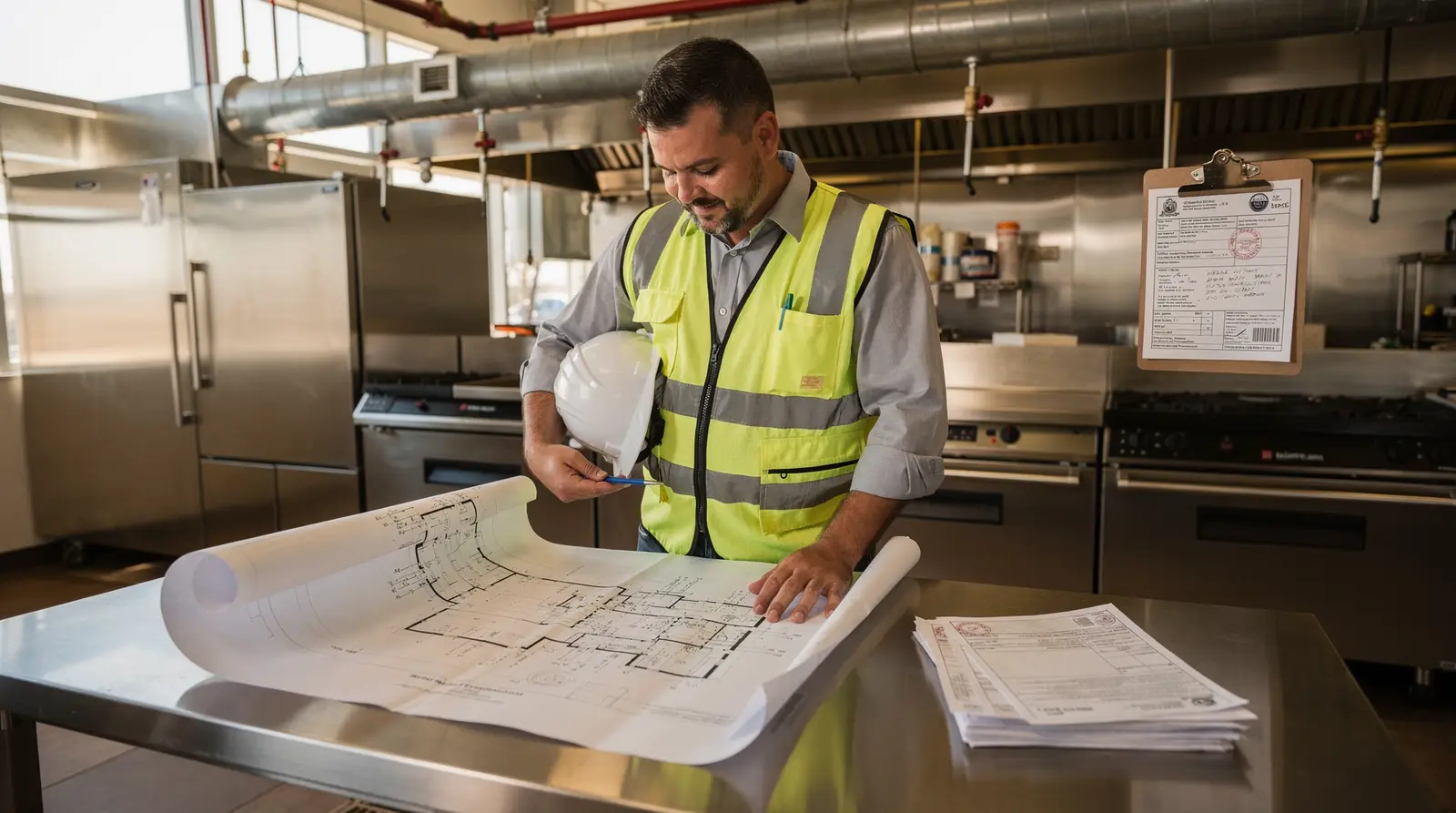
Permitting for a restaurant build-out in Metro Atlanta starts with the menu, not the floor plan. Restaurant build out contractors Georgia treat the menu as the foundational permit document because it dictates every mechanical, plumbing, and fire-suppression requirement that code officials review. A menu listing charbroiled items triggers a Type I hood, while a cold-prep-only concept avoids that requirement entirely. Settling the menu before drawings begin prevents the costly re-engineering that occurs when health departments reject plans mid-review.
What Equipment Decisions Affect the Permit Timeline?
Equipment selection runs parallel to permit applications, not after approval. Hoods, walk-in coolers, and grease interceptors can carry long lead times that must be coordinated with the permit schedule. Ordering these items against the permit schedule, rather than waiting for stamped drawings, keeps the project moving. A restaurant general contractor Atlanta coordinates submittal packages so the health department reviews equipment specs alongside architectural plans. Missing this overlap adds weeks to an opening date that no operator recovers.
How Does the Grease Trap Plumbing Commercial Code GA Impact Approvals?
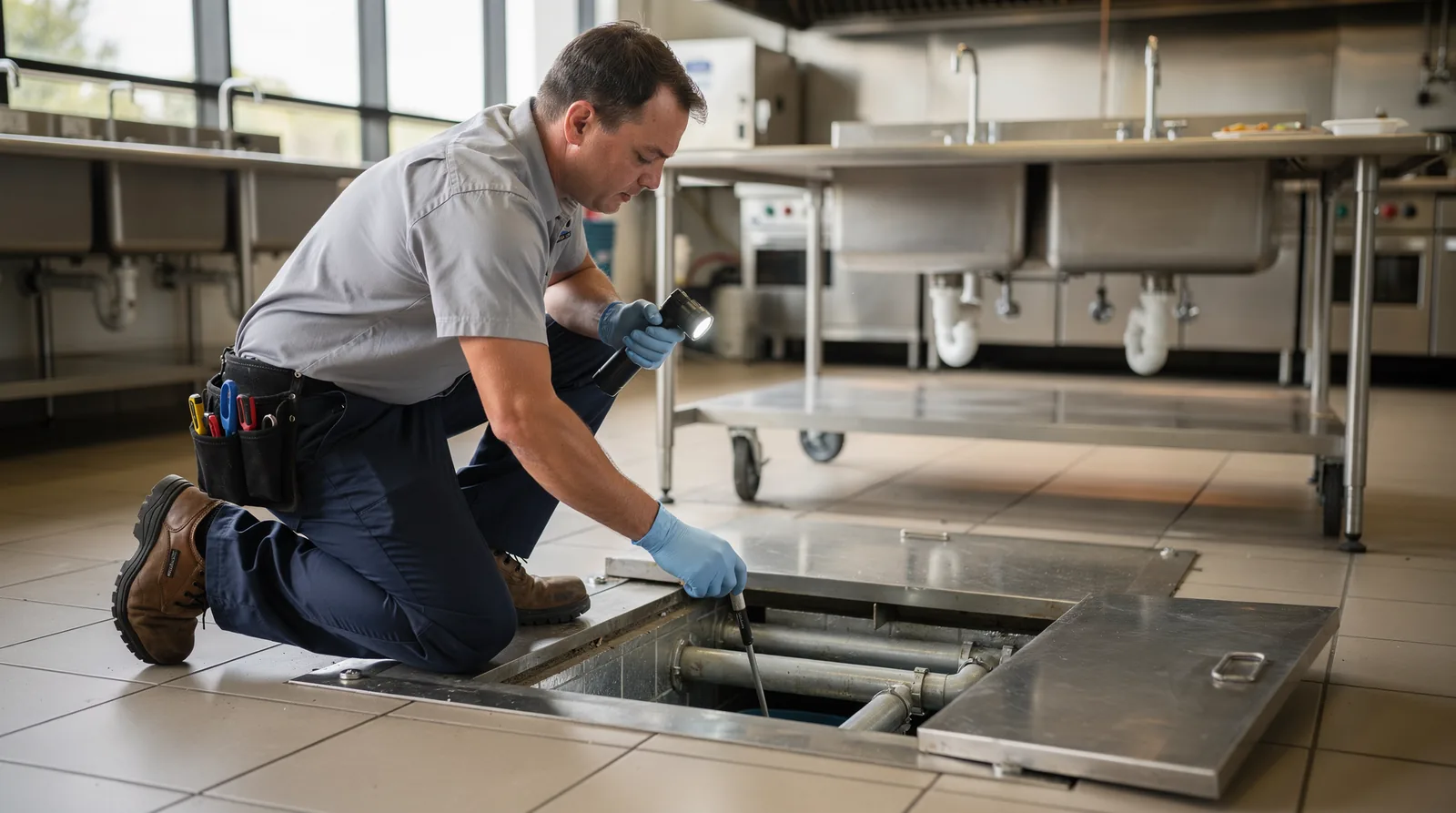
Grease trap plumbing commercial code GA requirements govern sizing, location, and accessibility of interceptors. Metro Atlanta jurisdictions enforce minimum retention times and solids-intercept capacities based on fixture counts and menu type. The plumbing inspector verifies that the interceptor sits outside the kitchen but within accessible reach for pumping contractors. Undersizing a grease trap triggers a failed rough-in inspection and a mandatory re-submission. That single correction can delay final health approval and push the opening date back.
The sequence after rough-in follows a strict hierarchy: hood and make-up air commissioning, refrigeration pull-down, final MEP sign-offs, then health department and franchisor punch lists. Each milestone gates the next. A general contractor familiar with local plan review processes knows which departments require additional documentation and which accept digital submissions. Without that familiarity, a permit set sits in queue while lease-hold costs accumulate daily.
What Are Grease Trap Plumbing Commercial Code GA Requirements?
Georgia commercial code mandates that every food service establishment install a properly sized grease trap plumbing commercial code ga system before opening. Missing this requirement stalls health department approval and delays revenue generation indefinitely.
Grease interceptors rank among the most schedule-critical items in any restaurant build. Hoods, walk-ins, and interceptors must be ordered against the construction schedule, not after it. A restaurant general contractor atlanta who treats the interceptor as an afterthought creates a bottleneck that pushes the open date back by weeks.
Why Does the Grease Interceptor Dictate the Construction Schedule?
A restaurant build is fundamentally a kitchen job that happens to have a dining room. The mechanical, electrical, and plumbing systems are designed for kitchen loads first. Hood and make-up air, the grease interceptor, and refrigeration take priority. Dining and bar finishes follow only after the kitchen MEP is resolved. This sequencing means the interceptor’s size, location, and connection points determine rough-in work that cannot proceed without it.
What Happens When Code Compliance Is Overlooked?
Health inspectors flag undersized or incorrectly installed interceptors immediately. The correction process involves excavation, re-piping, and re-inspection. Each day past the target open date represents revenue the operator never recovers. A commercial kitchen contractor atlanta familiar with local amendments avoids these failures by integrating code requirements into the initial design, not the punch list.
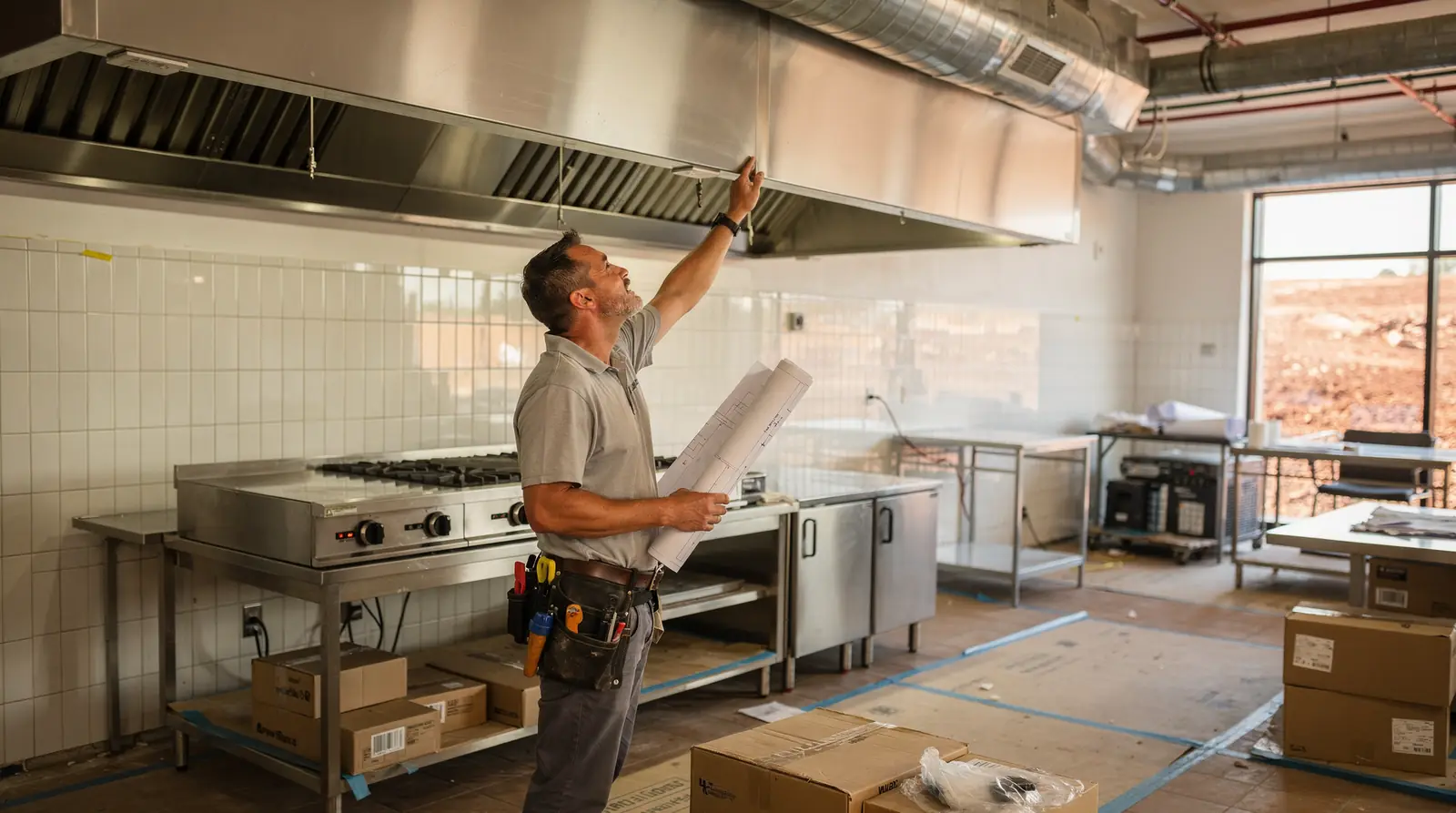
Restaurant build out contractors georgia must also coordinate the interceptor with hood and exhaust systems. These elements are marked schedule-critical for both compliance and timing. The hood, make-up air, and exhaust run together as a single compliance package. Delaying any one component cascades through the entire inspection sequence.
MHL Solutions, Inc. specializes in commercial restaurant build-outs across Georgia and ensures every grease interceptor installation meets state and local code before the inspector arrives. The company’s permit support process catches sizing errors during plan review, not during the final walkthrough. This approach keeps the project on schedule and protects the operator’s opening date.
How to Choose a Restaurant General Contractor Atlanta?
Selecting a restaurant general contractor Atlanta requires evaluating experience, portfolio depth, and industry recognition. Contractors are often evaluated on experience, portfolio depth, and evidence of consistent performance. A wrong choice delays opening day, and every lost day represents revenue a restaurant never recovers.
What credentials matter most for restaurant construction?
A contractor’s track record with health department approvals and equipment coordination separates capable builders from costly delays. The permit and the equipment set the open date long before construction finishes. A general contractor must manage both review paths simultaneously. Firms without this dual-path expertise routinely miss target openings by weeks or months.
MHL Solutions, Inc. builds trust through full attention to detail from project start, delivering quality and sustainability in every build. The company tailors construction and remodeling solutions to the client’s timeline and budget with no hidden costs. This precision matters most in kitchen-intensive projects where restaurant build out contractors georgia must coordinate hood systems, grease trap plumbing commercial code ga requirements, and equipment lead times before a single dining room fixture goes in.
How do you verify a contractor’s restaurant-specific capability?
Request a portfolio of completed food-service projects, not general commercial work. Examine the contractor’s experience with the specific build type: ground-up, second-generation suite conversion, or franchisor-mandated prototype. Awards and peer recognition provide independent validation of consistent performance. A qualified commercial kitchen contractor atlanta demonstrates fluency with local zoning, health regulations, and the mechanical demands unique to commercial cooking environments.
MHL Solutions, Inc. approaches each project with meticulous planning that keeps schedules predictable. The company’s commitment to transparent communication means clients understand exactly where their project stands at every phase, from permit submission through final health department sign-off.
Why Multi-State Licensing Matters for Metro Atlanta Operators?
Multi-state licensing protects restaurant operators from costly project delays. A contractor holding licenses across Georgia, North Carolina, South Carolina, and Tennessee eliminates the need to vet separate builders for each market. MHL Solutions, Inc. operates as a multi-state general contractor based in Atlanta, licensed across all four states, which streamlines expansion for hospitality groups moving beyond Metro Atlanta.
The stakes are concrete. Every day a restaurant sits unopened represents revenue that never returns. Operators expanding from one market into another face different health codes, building inspections, and permit timelines in each jurisdiction. A contractor unfamiliar with those variations stalls the schedule.
What Does Multi-State Licensing Mean for a Restaurant Build?
Licensing signals that a contractor has met each state’s regulatory requirements. For a restaurant general contractor Atlanta operators trust, that credential matters when projects cross county lines or state borders. MHL Solutions, Inc. holds the necessary licenses to work in all four states, reducing the administrative burden on clients.
How Does Licensing Affect Compliance and Timelines?
A contractor licensed in multiple states simplifies compliance with varying health and building codes. Metro Atlanta’s high-demand zones stretch from Midtown and Buckhead to the Eastside corridors, each with distinct regulatory environments. MHL Solutions, Inc. navigates those differences while keeping projects on schedule and within budget.
The company’s commitment to quality shows in its project delivery. MHL Solutions, Inc. ensures every project is completed on time and within budget, reflecting a focus on client satisfaction. For multi-unit operators, that reliability compounds across locations.
Restaurant build out contractors Georgia developers hire must understand local zoning and health regulations. Multi-state licensing extends that understanding beyond state lines. A single contractor managing multiple sites reduces coordination errors and keeps franchisor schedules intact.
Why the Right Atlanta Kitchen Contractor Protects Revenue
Selecting a contractor who coordinates grease interceptor sizing, hood compliance, and multi-state licensing from the first design meeting protects the operator’s opening date and revenue. The decision determines whether the project proceeds through inspection without delay or stalls on correctable errors. Operators who verify these capabilities before signing a contract secure a predictable path to the first service.
Frequently Asked Questions
Why do I need a specialized commercial kitchen contractor instead of a general builder in Atlanta?
Metro Atlanta’s zoning and health codes vary by district and change frequently across Midtown, Buckhead, and Eastside corridors. A general builder without this local code fluency often creates compliance failures that surface during inspection, while a specialized commercial kitchen contractor navigates these requirements and keeps the project moving toward a compliant opening day.
What determines the permit timeline for a restaurant build-out in Georgia?
The menu is the foundational permit document because it dictates every mechanical, plumbing, and fire-suppression requirement code officials review. Equipment selection, especially hoods, walk-in coolers, and grease interceptors, must be ordered against the permit schedule rather than after approval, since long lead times can otherwise delay the opening date.
What are the grease trap plumbing requirements under Georgia commercial code?
Georgia commercial code requires a properly sized grease interceptor before a food service establishment can open, with sizing, location, and accessibility governed by fixture counts and menu type. Metro Atlanta jurisdictions enforce minimum retention times and solids-intercept capacities, and an undersized trap triggers a failed rough-in inspection and a mandatory re-submission that delays final health approval.
What should I look for when choosing a restaurant general contractor in Atlanta?
Evaluate experience, portfolio depth, and a track record with health department approvals and equipment coordination, since the permit and the equipment set the opening date long before construction finishes. Request a portfolio of completed food-service projects specifically, not general commercial work, and confirm the contractor can manage hood systems, grease trap compliance, and equipment lead times together.
Why does multi-state licensing matter for a hospitality group expanding beyond Metro Atlanta?
A contractor licensed across Georgia, North Carolina, South Carolina, and Tennessee eliminates the need to vet separate builders in each market and simplifies compliance with varying health and building codes. This reduces coordination errors and keeps franchisor schedules intact for operators expanding multiple locations across state lines.