
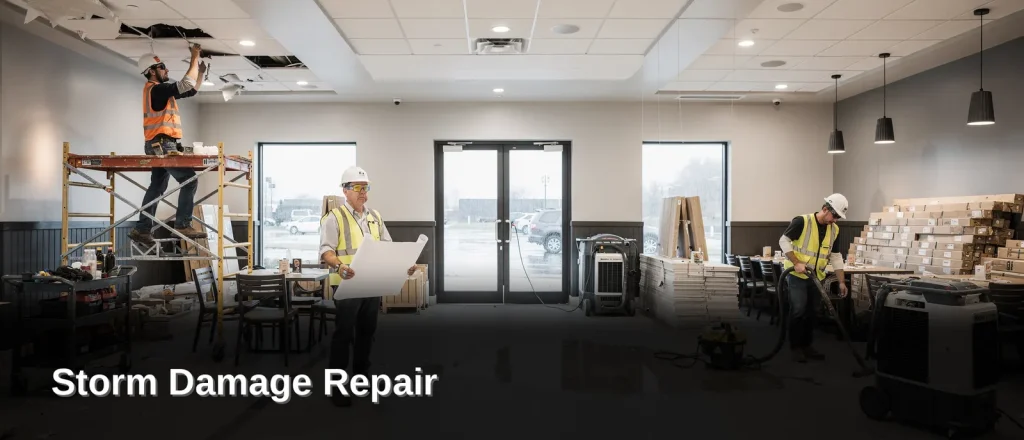
Structural repair after commercial storm damage involves inspecting load-bearing elements, securing exposed roofing and windows, removing debris, and rebuilding damaged components. MHL Solutions, Inc, licensed across NC, SC, TN, and GA and profiled in the Restaurant Remodeling Contractor Guide Atlanta, manages every phase from safety assessment through full restoration, minimizing downtime for property managers and business operators facing hurricane, tornado, or severe weather damage.
What is emergency storm recovery for commercial properties?
Emergency storm recovery is the immediate response process that gets a business operational again after hurricanes, tornadoes, blizzards, or other severe weather events. The goal is straightforward: minimize downtime and protect revenue. Every minute a facility sits idle hurts the company and creates additional losses in the form of unearned income.
Emergency storm recovery for commercial properties differs from routine maintenance because speed determines the financial outcome. A fast response limits secondary damage, while delayed action extends closure and compounds costs.
How does downtime affect a business after a storm?
Downtime translates directly into lost revenue. When operations stop, orders go unfilled, employees stand idle, and customers turn to competitors. The financial impact grows with each passing hour, which is why property managers need a response plan in place before the storm arrives.
Who handles commercial storm recovery in the Southeast?
MHL Solutions, Inc. operates as a licensed General Contractor across North Carolina, South Carolina, Tennessee, and Georgia. The company specializes in commercial build-outs and restoration, managing the full recovery process. Business owners can focus on reopening rather than coordinating contractors.
A typical recovery sequence includes:
- Structural stabilization to secure the building and prevent further damage
- Wind damage reconstruction to repair roofs, walls, and exterior systems
- Hail damage repair for roofing, siding, and exposed equipment
- Storm damage repair covering all interior and exterior restoration work
Each step builds on the last, moving the property from emergency response toward full, code-compliant reconstruction.
How does structural stabilization prevent further damage?
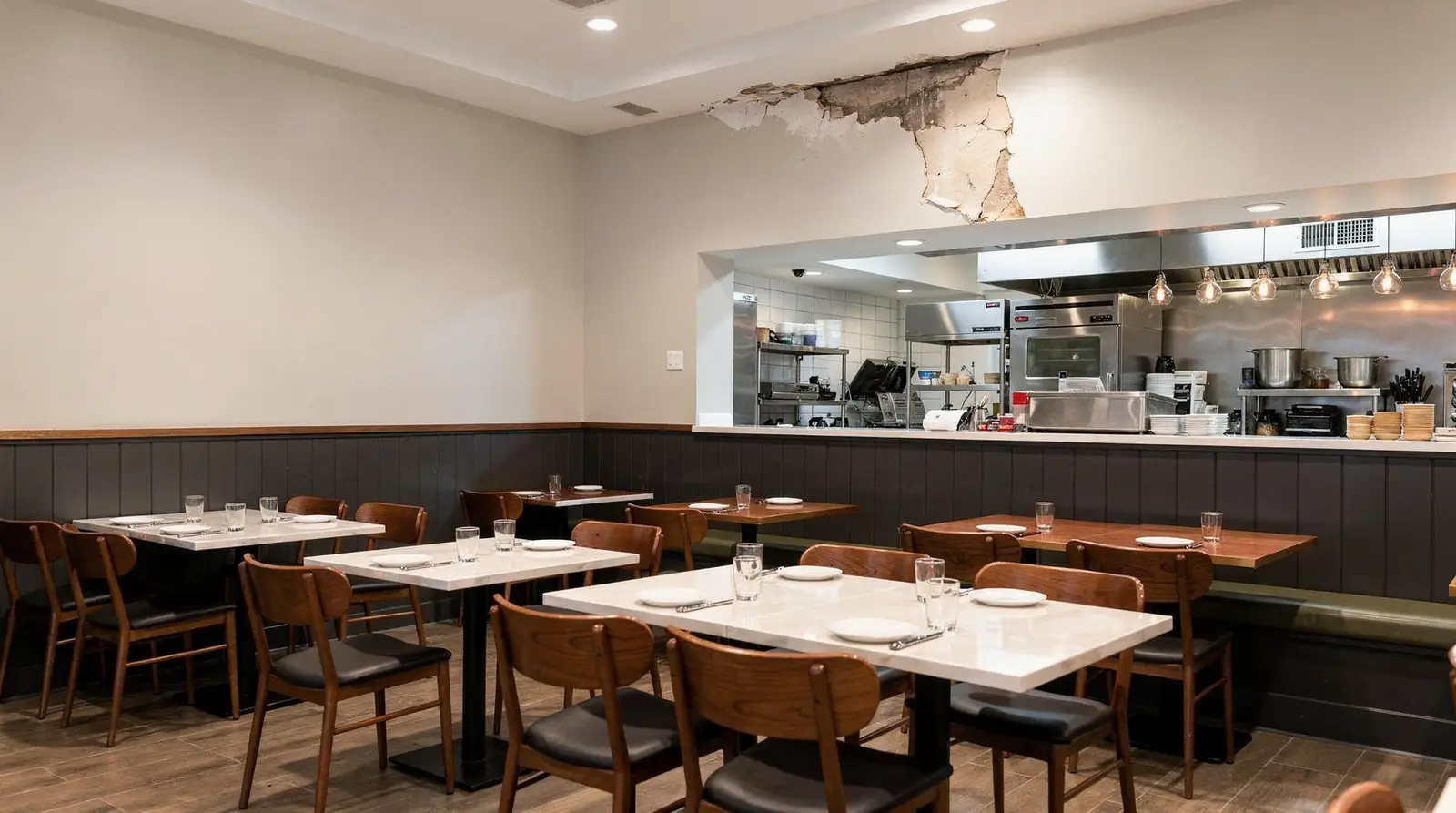
Structural stabilization stops a damaged building from collapsing or worsening after a storm. The process begins with a thorough inspection of structural integrity and identification of safety concerns. This assessment reveals which load-bearing elements, roof supports, and wall connections remain sound and which require immediate reinforcement. Without this step, hidden weaknesses can lead to catastrophic failure days or weeks after the initial event.
Even minor exterior damage creates serious downstream risks. A small breach in roofing or siding allows water intrusion that triggers interior damage, electrical hazards, and costly operational delays. What starts as a manageable repair escalates into a full interior restoration if stabilization is delayed. The financial consequences multiply with every hour the structure remains compromised.
What specific hazards does stabilization address?
Structural stabilization targets three primary threats. First, it secures compromised load paths that could cause partial or total collapse under wind loads or snow accumulation. Second, it seals exterior breaches that permit ongoing water damage to interiors, equipment, and inventory. Third, it eliminates electrical dangers from exposed wiring or water-damaged panels that pose fire and shock risks.
How does the stabilization process work in practice?
The stabilization sequence follows a logical order. Crews first brace or shore unstable walls and roof sections. They then install temporary supports at critical load points identified during the inspection. Finally, they cover openings with weather-resistant barriers to stop water intrusion. This phased approach prevents secondary damage while permanent repairs are planned and scheduled.
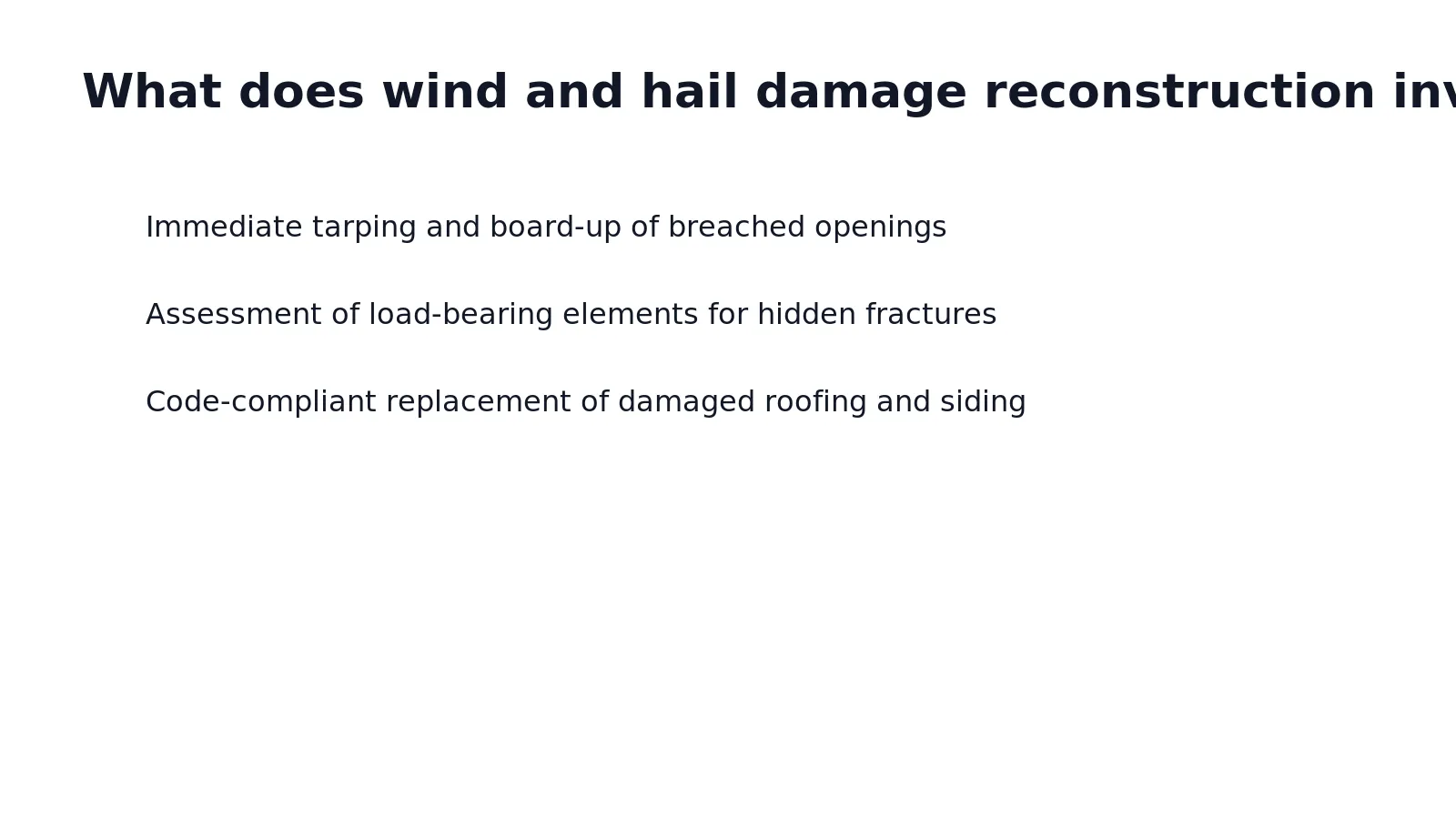
What does wind and hail damage reconstruction involve?
Wind damage reconstruction and hail damage repair begin with a critical first step: securing exposed roofing, windows, and entry points. Commercial storm claims frequently involve roofing systems, structural components, and exterior damage that require immediate attention. Without prompt action, secondary issues like water intrusion and electrical hazards compound the original loss.
Why is structural stabilization a priority after a storm?
Structural stabilization prevents further deterioration of a compromised building envelope. High winds can shift roof trusses, while hail impact fractures masonry and shingles. Stabilizing these elements stops progressive damage that would otherwise increase repair costs and extend business downtime.
How does emergency storm recovery differ from routine repairs?
Emergency storm recovery operates under compressed timelines compared to standard construction. MHL Solutions, Inc. designs reconstruction and remodeling solutions for each client’s timeline and budget with no hidden costs, as detailed in the Finding the Right Commercial Kitchen Contractor in Atlanta guide. The process prioritizes:
- Immediate tarping and board-up of breached openings
- Assessment of load-bearing elements for hidden fractures
- Code-compliant replacement of damaged roofing and siding
This phased approach ensures the building regains weathertight integrity before interior finishes are addressed.
Commercial Storm Disaster Protocols and Rapid Stabilization
Effective commercial storm disaster protocols are essential for minimizing damage and accelerating recovery. These protocols include pre-storm planning, rapid mobilization of emergency teams, and immediate site assessment upon hazard event completion. Priorities focus on safety, stabilization, and securing the property against further harm.
Rapid stabilization protocols emphasize the following steps:
- Emergency Safety Assessment: Identifying unsafe structures and hazardous conditions to protect personnel and occupants.
- Debris Removal: Clearing access routes and eliminating dangerous materials to facilitate repair efforts.
- Structural Shoring: Implementing temporary support where critical structural elements have been compromised.
- Envelope Protection: Applying measures such as tarping and board-up to protect the building envelope from weather exposure.
- Utility Control: Shutting off or securing utilities to prevent fire, flooding, or additional damage.
These procedures reduce secondary damages and lay the groundwork for a smooth transition to full structural repair and rebuilding.
Commercial Storm Recovery: Shoring, Tarping, and Membrane Sealing
Structural shoring is the method of providing temporary supports to compromised structural elements such as beams, columns, walls, and roof trusses to prevent collapse and ensure safety.
Common shoring techniques include:
- Raking shores: Diagonal supports placed against walls to resist lateral forces.
- Flying shores: Horizontal supports between two walls or columns to maintain spacing and stability.
- Column shores: Vertical supports that bear loads beneath weakened structural members.
Envelope protection involves safeguarding the exterior layer of the building to maintain weather-tightness and prevent moisture intrusion. Key techniques include:
- Roof tarping: Covering damaged or missing roof sections with waterproof tarps fastened securely to avoid wind uplift.
- Board-up services: Installing plywood or other rigid materials over broken windows, doors, and openings.
- Membrane sealing: Applying self-adhered or liquid waterproof membranes to seal cracks, gaps, or penetrations in roofing and walls until permanent repairs can be made.
These interventions reduce exposure to the elements, protect interior assets, and maintain structural integrity during the recovery timeline.
Envelope Moisture Intrusion Mitigation and Building Envelope Drying
Moisture intrusion after storm damage is a critical concern because it can lead to mold growth, material degradation, and structural weakening. Effective mitigation and drying strategies should be instituted as soon as possible.
Steps to combat moisture intrusion include:
- Immediate water extraction: Removing standing water from interior spaces and structural cavities.
- Dehumidification: Employing commercial-grade dehumidifiers to lower humidity levels and encourage drying.
- Air movement enhancement: Using fans and air movers to promote evaporation and ventilation.
- Thermal imaging and moisture mapping: Identifying hidden wet areas behind walls or in structural components for targeted remediation.
- Damaged material removal: Extracting saturated insulation, drywall, or wood to prevent long-term deterioration or microbial growth.
Building envelope drying preserves material performance and occupant health, preventing escalating repair costs and prolonged downtime.
Business Continuity and Staged Reopening Strategies for Commercial Properties
Preserving business continuity during and after storm damage is paramount for commercial operators. Coordinated strategies ensure that essential functions resume safely and efficiently, safeguarding revenue streams and customer relationships.
Key elements of business continuity planning post-storm include:
- Damage Assessment and Prioritization: Rapid evaluation of impacted systems critical to operations such as electrical, HVAC, and communication infrastructure.
- Establishment of Temporary Facilities: Setting up interim office spaces, storage, or production areas if permanent locations are severely damaged.
- Phased Reopening:Phase 1: Limited-access operations such as administrative functions working from unaffected areas.Phase 2: Partial customer service or production capacity with controlled environment and limited occupancy.Phase 3: Full reopening when building integrity and regulatory compliance are fully restored.
- Communication Plans: Regular updates to employees, clients, and stakeholders regarding recovery progress and operational status.
- Collaboration with Recovery Contractors: Scheduling work to minimize interference with ongoing business activities.
Implementing staged reopening reduces disruption risks and demonstrates organizational resilience in the face of disaster.
Comparison Table: Emergency Storm Recovery Versus Routine Repairs
Real-World Case Examples
Case 1: Hurricane Recovery at a Distribution Center, Georgia
Following a Category 3 hurricane, a large distribution center experienced extensive roof and exterior wall damage. MHL Solutions, Inc. mobilized within 24 hours to perform structural shoring and roof tarping. Immediate water extraction and envelope drying were initiated to protect stored inventory. Through staged reopening, the facility resumed 50% operational capacity within two weeks and full operations after six weeks, significantly reducing expected downtime.
Case 2: Tornado Damage in a Manufacturing Facility, Tennessee
A tornado severely damaged multiple sections of a manufacturing plant’s roof and loading docks. Rapid structural stabilization prevented partial collapse, and membrane sealing protected the building envelope during insurance inspections and repair planning. The phased reopening plan allowed administrative teams to return quickly, while production lines resumed only after complete roof replacement and interior repairs, maintaining employee safety and compliance.
Conclusion
In closing, commercial storm damage structural repair demands immediate professional attention to protect your business investment and ensure occupant safety. MHL Solutions, Inc. brings licensed expertise across the Southeast, combining thorough damage assessment with quality restoration tailored to your specific needs and timeline. Whether your facility requires foundational repairs, structural reinforcement, or complete reconstruction, our family-owned approach prioritizes detail and transparency throughout every phase of recovery.